The frying pan is cold, the hob is off, and yet the minute you flick on the extractor fan that unmistakable chip‑shop smell rolls across the kitchen.
You wipe the splashback. You change the bin. You crack a window. Still, every time the fan starts, yesterday’s dinner seems to float back down from the cupboards. It feels unfair: you bought the hood to get rid of smells, not to store them.
Ask a kitchen fitter, though, and they’ll tell you the same story: the problem is not the fan motor, the duct or your cooking. It’s a greasy, dishwasher‑safe part almost nobody ever touches.
The hidden chip shop above your hob
Every time you fry, grill or roast, tiny droplets of fat go up with the steam. The extractor doesn’t magic them away; it catches them. That’s the job of the metal mesh grease filter sitting just above your hob.
Over weeks and months, those meshes work like a sponge. Layer after layer of oil, smoke and microscopic food particles build up in the metal. The fan warms everything when you switch it on, and all those old meals release their scent in one go.
“We can often smell a kitchen before we see it,” one fitter in Leeds put it. “You turn the fan on and it’s pure Friday‑night takeaway, even if they haven’t fried anything for days.”
Recirculating hoods are worst for this because they blow air back into the room after passing it through filters. But even ducted extractors can end up recirculating the smell of stale grease if the mesh has turned into a tiny, warm chip tray.
The dishwasher‑safe bit you’re ignoring
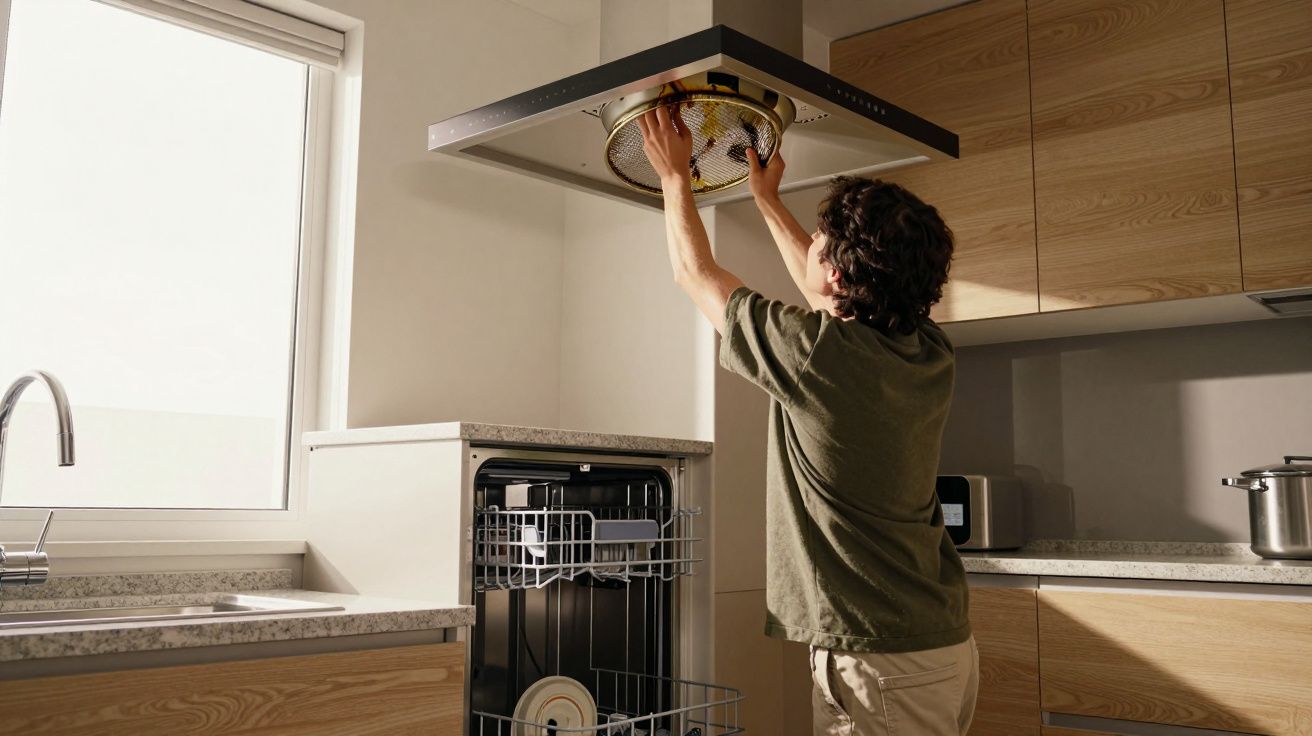
If you stand at your cooker and look up, that silvery or black panel you can see is almost always removable. It’s usually a shallow metal cassette that clicks or slides out with a small handle or two recessed tabs.
That is the grease filter – and on most modern hoods, it’s designed to go straight in the dishwasher. No special tools, no dismantling the whole unit. Just a firm pull and it’s out.
The problem is simple: a lot of people assume it’s part of the bodywork. Hoods are high up, awkward to reach and easy to forget about. The control buttons get wiped; the stainless steel gets polished. The filter behind? It might not have been washed since the kitchen was fitted.
Quick rule of thumb from fitters: if the mesh feels sticky when it’s cold, it’s overdue a clean. If it smells when it’s warm, you’re months behind.
How to clean it properly in 10 minutes
You don’t need a full “take the kitchen apart” day. Fitters tend to recommend a quick routine, done often rather than a heroic scrub once every few years.
- Switch the fan off and let everything cool. Safety first, especially if you’ve just been cooking.
- Remove the filter. Look for small catches, a handle or a lip you can pull down. It should hinge or slide out in one piece.
- Scrape off any thick build‑up. Hold it over the sink and use a plastic scraper or old spatula to lift off heavy grease. This stops your dishwasher filter clogging.
- Pop it in the dishwasher on a hot cycle. Place it upright in the bottom rack so the spray can reach both sides. Use your usual tablet, but avoid “eco” or low‑temperature programmes – they’re not hot enough to break down fat.
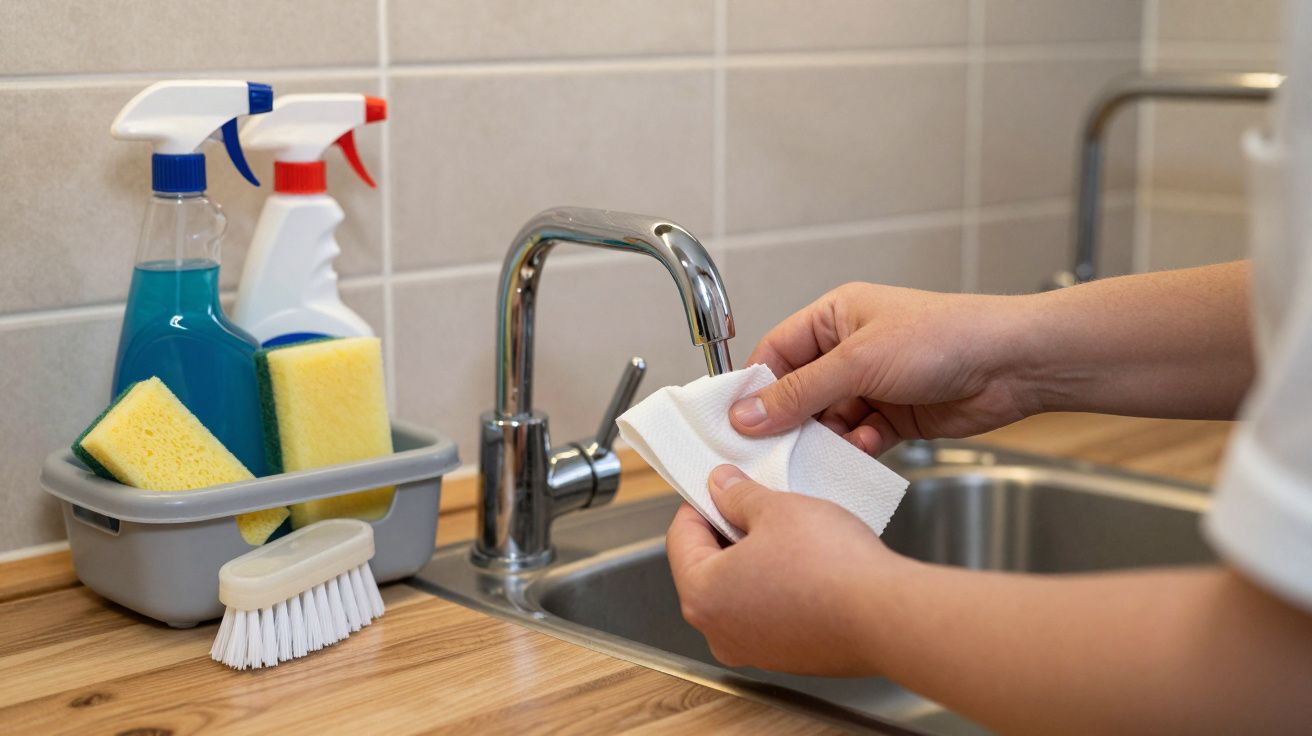
- No dishwasher? Use very hot, soapy water. Fill the sink, add a good squirt of washing‑up liquid and, if your filter is stainless steel, a spoon of soda crystals. Soak, then scrub gently with a soft brush. Avoid harsh oven cleaners, especially on aluminium.
- Rinse and dry thoroughly. Shake off excess water and let the filter dry completely so you’re not dragging moisture into the hood.
- Clip it back in place. Make sure it sits flat and the catches lock. A loose filter can rattle and reduce performance.
Most kitchen fitters will tell you: monthly is ideal for keen cooks, every three months is the bare minimum if you fry or roast regularly.
Two extra odour traps people forget
Cleaning the mesh filter usually fixes 80–90 per cent of the “old chips” problem. If the smell lingers, the culprits are often just around the corner.
1. The greasy rim and fan casing
With the filter out, you’ll see the metal or plastic frame inside the hood and sometimes the fan housing itself. Vapour hits these before or after the filter and leaves a sticky film.
Wipe around inside with a cloth dipped in hot, soapy water or a degreasing kitchen spray, taking care not to drench the electrics. Focus on:
- The inner lip where the filter sits.
- Any visible fan blades or plastic casing.
- The underside of the hood around the lights.
Small, regular wipes stop this layer turning into a permanent smell trap.
2. Spent charcoal filters in recirculating hoods
If your extractor doesn’t vent outside, it probably has a charcoal (carbon) filter hidden above or behind the grease mesh. This is a black cartridge or pad that absorbs odours – until it can’t any more.
Manufacturers typically recommend changing charcoal filters every 3 to 6 months, depending on how often you cook. After that, they simply stop doing their job and may even start to smell stale themselves.
Check your manual (or the model number online) to see:
- Whether your hood uses charcoal filters.
- How to access them.
- The exact replacement part number.
“A new carbon filter and a clean mesh turns a dead hood into a decent one again,” says a fitter from Bristol. “People think they need a new appliance when they really just need fresh filters.”
A simple timetable fitters wish every household followed
You don’t need to treat your extractor like a museum piece. You just need a quiet, repeatable rhythm.
| Part | How often? | Dishwasher‑safe? |
|---|---|---|
| Metal grease filter | Every 4–8 weeks | Usually yes |
| Inner rim & casing | Wipe every month | N/A |
| Charcoal filter | Every 3–6 months | No – replace |
If you cook a lot of fried food, use a wok regularly or have a small, closed‑off kitchen, lean towards the more frequent end. Light use in a well‑ventilated, open‑plan space can stretch the gaps slightly.
Why this tiny habit changes how your kitchen feels
Smell shapes how we read “clean”, often more than what we see. A spotless worktop and shining hob still feel grubby if there’s a faint background of old oil every time the fan spins up.
Once the filter is clean and the old grease is gone, something small but noticeable shifts. The kitchen smells more like whatever you’re cooking now, not a replay of last month’s fish fingers. The air after dinner clears faster; that heavy, clingy layer disappears.
And because the fix is simple – unclip, into the dishwasher, back again – it’s realistic to keep up. No special products, no ladders, no professionals.
The fan goes back to doing what you bought it for: pulling steam and smells out of the way, instead of breathing last week’s chips back into the room.




Comments (0)
No comments yet. Be the first to comment!
Leave a Comment