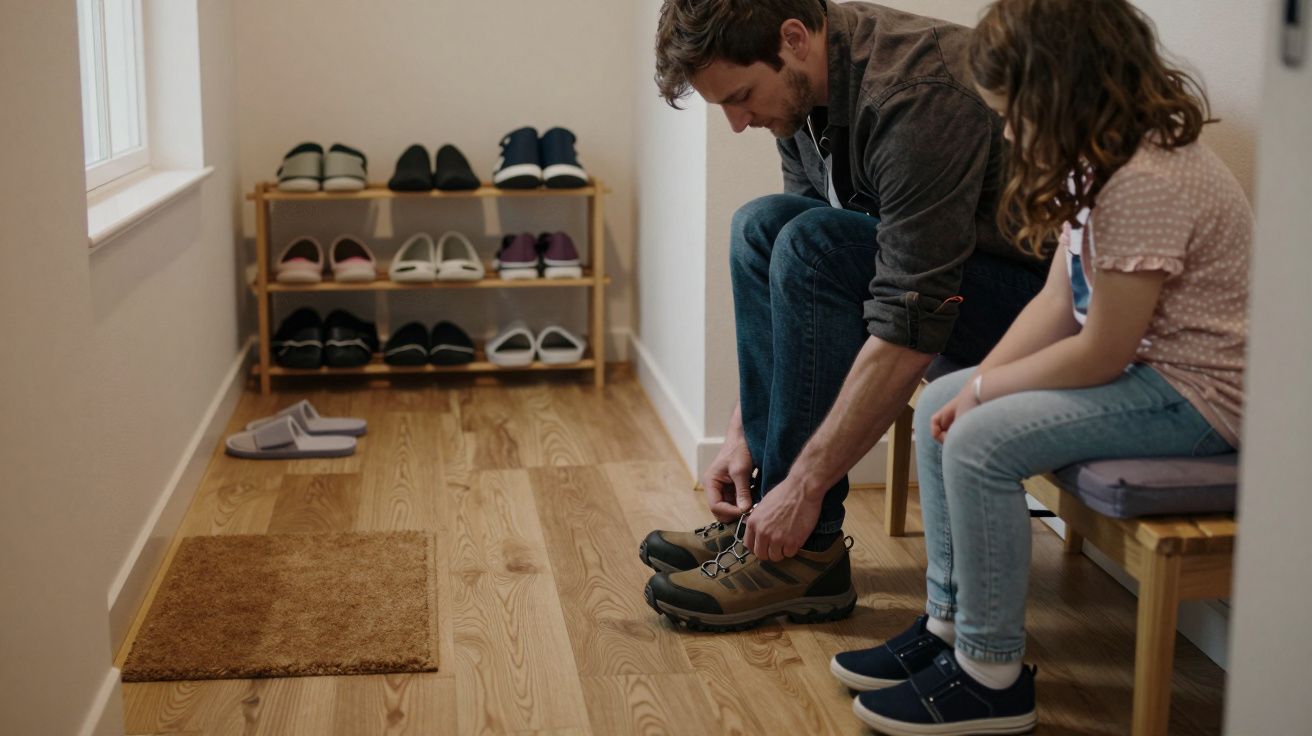
A small ritual plays out in countless hallways every evening. Some people unlace trainers the second they cross the threshold. Others keep shoes on until they reach the sofa. Between the two camps, the debate mixes politeness, hygiene and comfort.
Behind this everyday choice sit questions for your skin, your joints and your airways. Podiatrists and allergists look at the same front door from different angles: what ends up on the floor, what touches your feet, and what you then breathe or pick up with your hands.
Their verdict? There is no single rule for every household – but there are clear situations where “shoes off” is kinder to both your feet and your floors, and others where a pair of supportive indoor shoes quietly wins.
Why the shoes-at-home question is more than a manners issue
Outdoor shoes cross pavements, public loos, parks and train platforms before they meet your hallway. They carry soil, traces of faecal bacteria, heavy metals from traffic, pesticides from grass, plus pollen and mould spores. Most of this ends up on your doormat and floor rather than on your hands or mouth, but it still changes what you live with indoors.
At the same time, your feet have their own needs. Going barefoot all evening on hard floors can strengthen muscles for some people and cause heel pain for others. Thick slippers warm the toes yet may increase sweating and fungal infections if they never fully dry.
The health question is less “shoes on or off?” and more “what do your soles bring in, and what do your feet stand on instead?”
Allergists focus on the particles that collect in carpets and gaps. Podiatrists look at alignment, cushioning and the skin environment in your shoes or socks. When they compare notes, a pattern appears: cleaner, low-shoe homes with sensible indoor footwear and regular cleaning often offer the best of both worlds.
What actually rides in on your soles
Studies on household dust show that much of the dirt at floor level originates outside. Shoes act as a shuttle for:
- Soil and fine dust
- Pollen grains and plant debris
- Pet faeces from pavements and parks
- Road dust containing metals and hydrocarbons
- Bacteria and traces of viruses from public spaces
For most healthy adults, the infection risk from floor microbes remains low, especially if you wash your hands before cooking and eating. The bigger issue for allergists is accumulation over time.
Pollen, mould fragments and pet allergens cling to fibres in carpets and rugs. Each footstep or vacuum pass can send them back into the air. Children who crawl or play on the floor stir them up at nose height, exactly where little lungs sit.
Shoes worn outdoors concentrate what your street and commute leave behind. The more time you spend on the floor – or the more your children do – the more this matters.
Households near busy roads, parks sprayed with herbicides, or farms using pesticides carry a higher load on soles. In such settings, a “shoes off by default” rule at the door sharply cuts what enters, especially for carpets and soft flooring that are harder to deep clean.
Flooring, cleaning habits and children: when it matters most
The same pair of trainers does not pose the same problem in every home. Three variables change the equation:
- Type of floor
- Who lives there
- How often you clean
On smooth, hard flooring (wood, tiles, vinyl), regular sweeping and mopping remove much of what shoes bring in. The main risk comes from tiny children who still lick hands and drop toys on the floor, and from anyone lying on mats to exercise.
On carpets and thick rugs, particles settle deep and resist casual vacuuming. Families with babies, toddlers, allergy-prone teenagers or pets are the ones allergists worry about most.
A “shoes off indoors” rule becomes particularly protective when:
- A child has asthma, eczema or known dust-mite or pollen allergy.
- Someone is immunocompromised and spends long periods at home.
- You live in a high-pollution area or very close to a main road.
- Your cleaning routine is more “weekend blitz” than “daily micro-clean”.
A simple doormat inside and outside the door, plus a spot to leave shoes, catches a large share of the incoming load. Add a consistent vacuum routine (with a HEPA filter if asthma is an issue), and the argument for wearing outdoor shoes all over the house quickly weakens.
Barefoot, socks, slippers: what podiatrists want you to know
Once you decide what happens to outdoor shoes at the door, another choice starts: what do you wear instead? From a podiatry point of view, the answer depends on your feet, your floors and how long you stand or walk at home.
For most people, the best policy is “outdoor shoes off, supportive indoor footwear on” – not bare feet all day and night.
Barefoot benefits and limits
Short, regular periods barefoot on safe, clean floors can:
- Strengthen small foot muscles
- Encourage better toe spread and balance
- Give skin a break from pressure points in stiff shoes
But podiatrists add several cautions:
- Hard floors (tiles, concrete, thin laminate) increase strain on heels and arches, especially in people with flat feet or high arches.
- Cold floors can worsen circulatory problems or Raynaud’s symptoms.
- Hidden splinters, small toys or pet debris increase the chance of cuts, particularly if you have reduced sensation.
People with diabetes, peripheral neuropathy, poor circulation or a history of foot ulcers are usually advised not to walk barefoot, even at home, because they may not feel small injuries that later become serious.
Socks and soft slippers: hygiene versus support
Plain socks or very soft, unsupportive slippers feel gentle, but they change how your foot interacts with the floor. They slide more easily, which can be a slip risk on stairs and smooth surfaces. They also offer little arch support.
Hygiene-wise, warm, slightly damp fabric around the toes is an ideal environment for fungi and bacteria. Re-wearing the same sweaty pair of socks or slippers evening after evening without fully airing them out encourages athlete’s foot and toenail fungus.
Podiatrists recommend:
- Changing socks daily and drying feet carefully between the toes.
- Choosing breathable materials (cotton, wool blends) rather than fully synthetic.
- Washing slippers regularly, or using washable insoles.
The case for dedicated indoor shoes
Supportive indoor shoes – think light trainers, clogs or slippers with a proper sole and arch – sit somewhere between the barefoot ideal and stiff outdoor footwear.
They should:
- Be used only indoors, so they stay relatively clean.
- Offer cushioning and arch support appropriate to your foot type.
- Fit securely, without flopping at the heel.
- Allow some flex at the forefoot to keep muscles active.
People with plantar fasciitis, bunions, arthritis, or flat feet often feel much better with this approach than barefoot. Indoor shoes also protect from dropped objects, Lego bricks and chilly floors.
A simple rule many podiatrists like: outdoor shoes off at the door, straight into a pair of clean, supportive indoor shoes kept in the hallway.
Allergists’ view: dust, mites and what lives in your carpets
Allergists examine what settles, not just what steps. They see floors, soft furnishings and bedding as one connected ecosystem for allergens and mite droppings.
Dust mites, for example, thrive in warmth and humidity, feeding on the skin flakes we constantly shed. Shoes do not bring the mites in – they already live in fabrics – but they contribute:
- Extra dust and skin cells to feed mites.
- Pollen and mould fragments that irritate inflamed airways.
- Fine particles that make existing allergies more reactive.
Shoes off at the door does not cure allergies, but it can cut one source of irritants and make other efforts (like washing bedding hot and vacuuming) more effective.
Allergists typically suggest a “shoes off indoors” policy when:
- There is diagnosed asthma, allergic rhinitis or eczema in the home.
- Someone has strong seasonal pollen allergies and lives in a high-pollen area.
- Pets go outdoors and then sleep on carpets, beds or sofas.
Pair this with:
- A robust doormat and shoe zone by the door.
- Regular vacuuming of carpets and rugs (weekly or more in high-traffic areas).
- Occasional deep cleaning of soft furnishings.
- Ventilation: short, regular airing to reduce indoor humidity.
Comparing your options at the front door
You can blend foot health and floor hygiene by choosing a setup that suits your household. This comparison helps clarify trade-offs:
| Household policy | Floors & air | Feet & joints |
|---|---|---|
| Outdoor shoes everywhere | More outdoor dirt, pollen and microbes indoors; harder to keep carpets low-allergen | Good support if shoes are well-fitted, but longer daily wear and less skin “breathing” |
| Shoes off, mostly barefoot/socks | Less incoming dirt; easier to keep floors clean; best for allergy control with good cleaning | Fine for many on soft floors and short periods; risk of heel/arch pain on hard floors; slip risk in socks |
| Shoes off, dedicated indoor shoes | Strong reduction in outdoor contaminants; easier deep clean; good for allergic homes | Usually best balance of support, warmth and protection; footwear can be chosen for your specific foot issues |
For most families, the third option gives the most health advantages with the fewest drawbacks.
Practical ways to make a “shoes off” rule work
A strict sign on the door is one approach. Many households, though, prefer quiet nudges that make the cleaner option feel easy rather than bossy.
Simple measures:
- Place a tough, easy-to-clean doormat outside and just inside the door.
- Add a small bench or chair so people can sit while removing shoes.
- Provide a rack or tray for outdoor shoes and a separate space for indoor pairs.
- Offer spare, washable slippers or clean socks to guests who are comfortable removing shoes.
- Set a weekly schedule to vacuum high-traffic areas, especially near the entrance.
If someone in the family has mobility issues, balance problems or medical reasons to keep shoes on, you can still reduce contamination by:
- Keeping a “cleaner pair” of outdoor shoes reserved for indoor use in poor weather.
- Wiping soles with a damp cloth or disposable wipe before moving into carpeted areas.
- Covering thick carpets in key zones with washable runners that can go in the machine.
Foot-care rules that matter more than the shoe ritual
Whether you live in a shoes-on or shoes-off household, certain habits protect your feet far more than the exact doorway ritual:
- Inspect feet regularly, especially if you have diabetes or reduced sensation.
- Wash and dry thoroughly between the toes once a day.
- Rotate footwear to allow full drying; avoid wearing the same closed shoes every single day.
- Trim nails straight across and avoid digging into the corners.
- Seek podiatry advice early for persistent pain, thickened nails or skin breaks.
The healthiest homes combine moderate shoe discipline at the door with good cleaning and attentive foot care, rather than obsessing over one rule in isolation.
FAQ:
- Is it unhygienic to let babies crawl on floors where shoes have been worn? Not automatically, but it does increase their contact with outdoor dirt, pollen and microbes. If shoes are worn indoors, frequent vacuuming and mopping, plus handwashing before meals, become more important. In allergic or medically fragile children, a “shoes off” rule is usually recommended.
- Can I go completely barefoot at home if I have flat feet? Some people with mild flat feet manage well barefoot for short periods on soft floors, but many develop arch or heel pain on hard surfaces. Podiatrists generally advise supportive indoor footwear for flat feet, at least during longer standing or walking.
- Do slippers spread fungus more than normal shoes? Any closed, warm footwear can harbour fungi if it stays damp and is rarely washed. Slippers used without socks and worn every evening are a common reservoir. Washing them regularly and letting them dry completely between uses reduces this risk.
- Will a “shoes off” rule alone fix my dust-mite allergy? No. Dust mites live mainly in bedding, mattresses, sofas and carpets. Shoes off cuts one source of dust and pollen but must be combined with hot washing of bedding, regular vacuuming and humidity control to make a noticeable difference.
- How often should I clean the floor if we keep shoes on indoors? In high-traffic areas such as the hallway, kitchen and living room, aim for at least one thorough vacuum or sweep plus damp mop per week, more if you have pets or small children on the floor. Carpets benefit from periodic deep cleaning, especially in households with allergies.
Comments (0)
No comments yet. Be the first to comment!
Leave a Comment