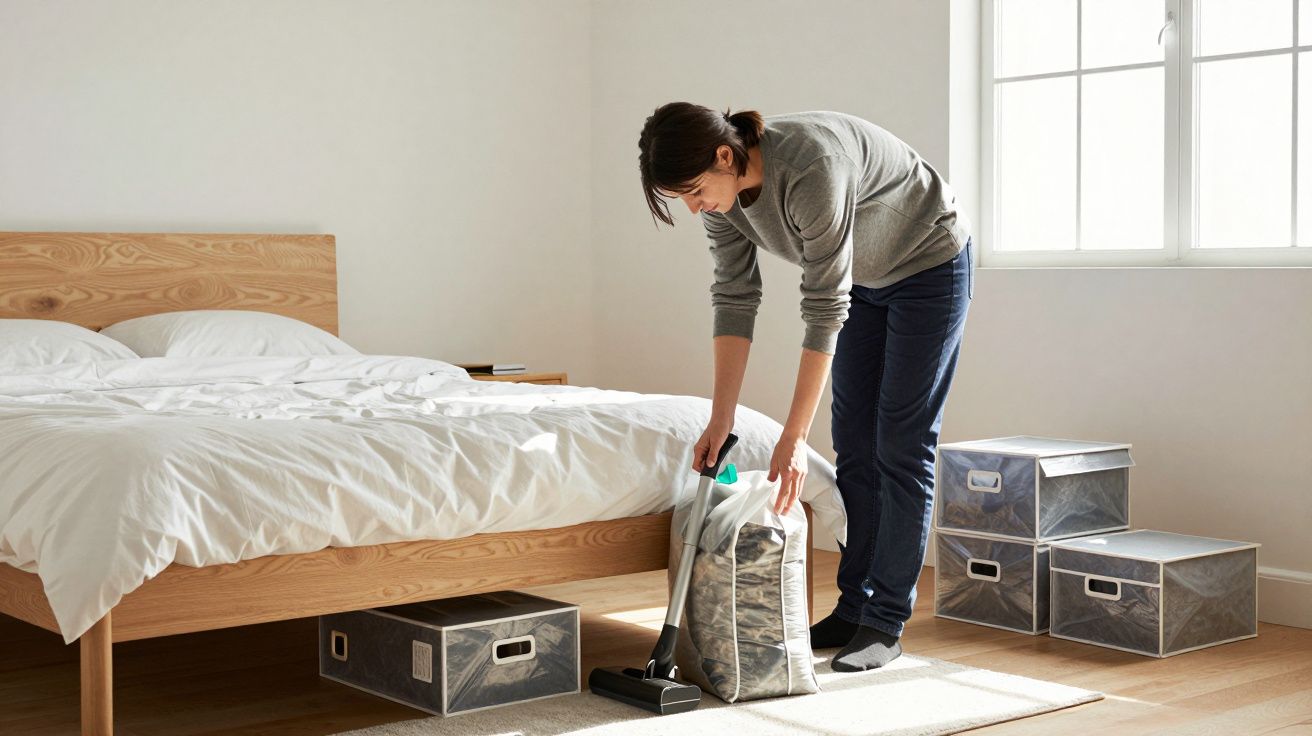
The spare duvet you meant to lend your cousin. The old pillows “for camping”. The baby bedding nobody’s used in ten years. They drift upwards, into the loft or the airing cupboard, and stay there until you need the Christmas decorations or a suitcase – and suddenly realise the shelves are bowing.
Firefighters say that is exactly the moment they picture when they talk about “hidden fuel” in homes. Not candles left burning, not chip pans, but piles of soft, synthetic fabric stacked tight around hot pipes, cylinders and old wiring. You may only open that door once a week. If a fire starts inside, it can race for a long time before anyone notices.
You don’t need to live in fear of your towels. But a small shift in where and how you store them can make a big difference to how fast a fire might spread – and how much time you’d have to get out.
Why stuffed airing cupboards worry firefighters
A traditional British airing cupboard often wraps three things into one small, closed box: a hot water cylinder, live electrics, and a mountain of fabric. That combination is what makes fire crews uneasy.
The cylinder and its pipes run hot for long stretches. Old immersion heaters, pumps and thermostats sometimes fail. Add in a trailing extension lead for the dehumidifier or a stash of rechargeable gadgets, and you have several possible ignition sources inches from material that burns fast and produces heavy smoke.
Firefighters talk about “fuel load”: not what starts a fire, but what lets it race through a home.
Towels, sheets and duvets pack tightly, so once a corner catches, flames travel up through the stack like a chimney. The door keeps it all out of sight until smoke leaks under the frame or the alarm finally sounds on the landing. At night, those extra minutes matter.
None of this means you can never keep linen in an airing cupboard. It does mean it should be treated as a warm mechanical space with storage as a side benefit – not a linen warehouse wrapped around a boiler.
How loft hoards turn a small fault into a big fire
Lofts feel like free space. Old duvet? Up it goes. Extra mattress? Balance it on the joists. You close the hatch and forget about it. Fire brigades, on the other hand, see a cramped, dry timber box threaded with cables and insulation, filled with things that burn easily and quickly.
Most British lofts have:
- Electrical cables running across joists and through insulation.
- Downlighter fittings from rooms below, which can get hot.
- Junction boxes, TV amplifiers or old transformers tucked in corners.
When duvets, pillows and cardboard boxes are piled over the top, three things happen. Heat from lights and cables has less room to escape. Any fault or loose connection sits in direct contact with soft, flammable material. And once burning starts, dense smoke and heat build in a space with poor ventilation, often without a nearby smoke alarm.
For firefighters, accessing a loft filled edge to edge with boxes and bedding is slow and hazardous. They have to feel their way on joists, under a roof that may already be weakening, through choking smoke fed by exactly the things many of us store up there “just in case”.
The safer storage switch: move the bulk, not the habit
The good news is you don’t need a bigger house or fewer guests. You need a different default: keep big soft items where you sleep, not where your electrics sleep.
Think of it as a three-part switch:
Strip heat-heavy spaces.
Anything that gets hot or carries power – hot water cylinder cupboards, boiler rooms, meter cupboards, loft areas crowded with wiring – should hold the minimum of bedding and towels.Shift bulk to “cool storage” zones.
Spare duvets, pillows and seasonal bedding live in bedrooms instead:- Under-bed boxes or zipped fabric bags.
- The top shelf of wardrobes.
- Slim, lidded containers behind a sofa or on top of a sturdy chest of drawers.
Bag and label.
Use vacuum bags or robust zipped covers to compress and protect:- Keep them at least a hand’s width away from sockets, chargers or extension leads.
- Label by size and season so you’re not tempted to restock the airing cupboard “just for now”.
The tiny habit change: warm spaces hold what you use weekly; cool spaces hold the long‑term stash.
You still get dry, cosy linen. You just stop wrapping the hottest gear in the house in a thick, flammable blanket.
A five‑minute safety review for your airing cupboard
Walk to the cupboard, open the door, and look at it like a visiting electrician rather than the person hunting for a towel.
Run through this quick checklist:
Clear a buffer around heat.
Aim for at least 10 cm of space around the cylinder, pipes and any visible electrics. No towels draped directly over them.Keep electrics visible.
You should be able to reach the immersion switch, pump, valves and any fused spurs without digging through bedding.Ban extension leads.
Multi‑way blocks, phone chargers and plug‑in heaters have no place in an airing cupboard. Charge in open, cooler rooms with space around the device.Thin the stack.
Limit the cupboard to:- One set of towels per person plus one spare set.
- One change of bedlinen per bed.
- Any extra duvets or pillows moved elsewhere.
Check the door and alarm.
Make sure the door closes properly but isn’t locked. Confirm there’s a working smoke alarm on the landing outside; test it monthly.
If you feel a blast of hot air when you open the door, or the top shelf feels noticeably warm to the touch, that’s a sign you’ve packed too tightly around something that’s working hard.
A quick loft check that doesn’t need ladders for hours
You don’t need to empty the entire loft to make it safer. A short, targeted look can highlight the biggest issues.
Find the wiring and lights.
Gently move items away from visible cables, junction boxes and downlighter fittings. Nothing soft or flammable should sit directly on top of them.Create a clear path.
Leave a walkway from the hatch to the water tank, stopcock and any booster units. In an emergency, you or a firefighter needs to reach them fast.Avoid permanently powered gear.
Wi‑Fi boosters, TV amplifiers and similar devices can live in cooler, accessible rooms instead of being buried in insulation and bedding overhead.Consider a heat alarm.
Where it’s practical and permitted, a heat detector (rather than a smoke alarm, which can be triggered by dust) outside the loft or just inside the hatch can act as an early warning.Think weight as well as fire.
Mattresses and stacks of duvets are heavy. Spreading them over small areas of ceiling not designed for load adds structural strain on top of fire risk.
The aim is not an empty loft; it’s a loft where a small fault doesn’t instantly feed on a duvet mountain.
Red flags you can spot in seconds
These are the kinds of details fire crews wish people noticed earlier:
- Brown scorching or heat marks on wood or plaster near cylinders, pipes or spotlights.
- A musty, slightly burnt plastic smell when you open the airing cupboard.
- Plug sockets warm to the touch or visibly overloaded adaptors hidden behind towels.
- Old electric blankets folded tightly and buried under other bedding.
- Duvets stuffed right up against downlighter cans or transformer boxes in the loft.
If you see any of these, act the same way you would with a suspicious plug: unplug, clear space, and if in doubt, have an electrician take a look.
Storage choices at a glance
Use this table as a quick sense‑check when you’re deciding where to stash that spare king‑size:
| Where you store it | Risk level | A safer tweak |
|---|---|---|
| Wrapped round hot water cylinder in airing cupboard | High – close to heat and electrics | Move bulk to under‑bed bags; keep only thin layer on shelves with 10 cm gap to cylinder |
| Balanced over loft cables and downlighters | High – hidden ignition points under flammable load | Shift boxes and bedding off wiring; store on boarded area away from fittings |
| In zipped bags under bed or on wardrobe top | Lower – cooler, accessible, alarms nearby | Keep a hand’s width from sockets and chargers; don’t block radiators or vents |
Small distance changes – a hand’s width here, a cleared shelf there – turn high‑risk spots into low‑drama storage.
What to do with duvets you’ll probably never use
Once you start sorting, you may find three spare kingsize duvets and six odd pillows you didn’t know you owned. Keeping all of them “just in case” tends to push the pile back into unsafe corners.
Better options:
Donate where they’re welcome.
Many animal shelters, rescue centres and some homeless charities take clean, good‑condition duvets and blankets. Always check their current policy first.Use textile recycling.
Torn or flattened duvets and pillows usually can’t be passed on second‑hand, but textile banks and council recycling schemes often accept them for shredding and reuse.Make practical kits.
One compact bag per bed with duvet, pillows and covers for guests, labelled by size, is easier to store and safer than one giant mixed heap.
The more intentional each spare item is, the less likely it is to lurk as hidden fuel no one remembers owning.
You free up space, cut risk, and someone else might sleep warmer because you finally tackled the loft.
FAQ:
- Is it ever safe to store bedding in an airing cupboard?
Yes, in moderation. Keep shelves lightly stocked, leave clear air around hot water cylinders and pipes, avoid extension leads, and make sure there’s a nearby working smoke alarm. Treat it as a warm drying space, not deep storage.- Can duvets or towels spontaneously catch fire on their own?
Ordinary clean duvets and towels do not spontaneously combust. The risk comes from contact with faulty electrics, hot lights or heaters, and from the speed and intensity with which a pile of them will burn once something has ignited.- Are vacuum storage bags safe near hot pipes or cylinders?
Vacuum bags reduce bulk but still contain flammable fabric and plastic. They should not be pressed directly against hot pipes or cylinders. Keep them in cooler spots like under beds or on wardrobe tops, with space around any nearby sockets.- Do I need a smoke alarm in the loft?
Most homes don’t have alarms in the loft, but you should have working smoke alarms on every level of your home, including hallways near loft hatches and airing cupboards. In some cases, a heat detector near high‑risk spaces can offer extra warning.- What about electric blankets stored with other bedding?
Old or damaged electric blankets are a known fire risk. Check the cable and controls for wear, follow the manufacturer’s instructions, don’t fold them tightly, and never store them plugged in. If in doubt, replace rather than stash.




Comments (0)
No comments yet. Be the first to comment!
Leave a Comment